
A Short Story
By Annette Halsey
Carlos leaned back from his desk and stretched. Like others living in the Millennial Kingdom, he was not overworked and enjoyed most of what he had to do, but there were still opportunities for hard work and a sense of satisfaction when that work was accomplished. After yawning, he stood and went in search of his father.
“¡Papá! I have finished. Do you mind if I go into the jungle? I will be back by the Sabbath.”
Fearing neither danger nor deception, Carlos’s father easily let his teenage son go. As soon as he had his father’s permission, Carlos climbed out a window and into a tree. (Why bother with the door when going on an adventure?) He was able to move from tree to tree to the end of the avenue, and a few minutes of running took him into the jungle beyond.
Once there, the breath-taking beauty made him pause, combined with the contrast between life in the present-day and his earliest memories. Unlike his parents and siblings, who had glorified bodies and were already part of the King’s immortal government, Carlos had died young, without believing in Jesus for everlasting life. Like the others who had died before the age of twenty (or had survived the Tribulation without reaching the age of twenty)1, he was given a mortal body and again had the chance to believe in Jesus for everlasting life during the several hundred years2 where he would live in an environment where the Lord reigned, correct teaching about the Lord was everywhere, and sin was the lowest it had been since the Fall of Adam and Eve.
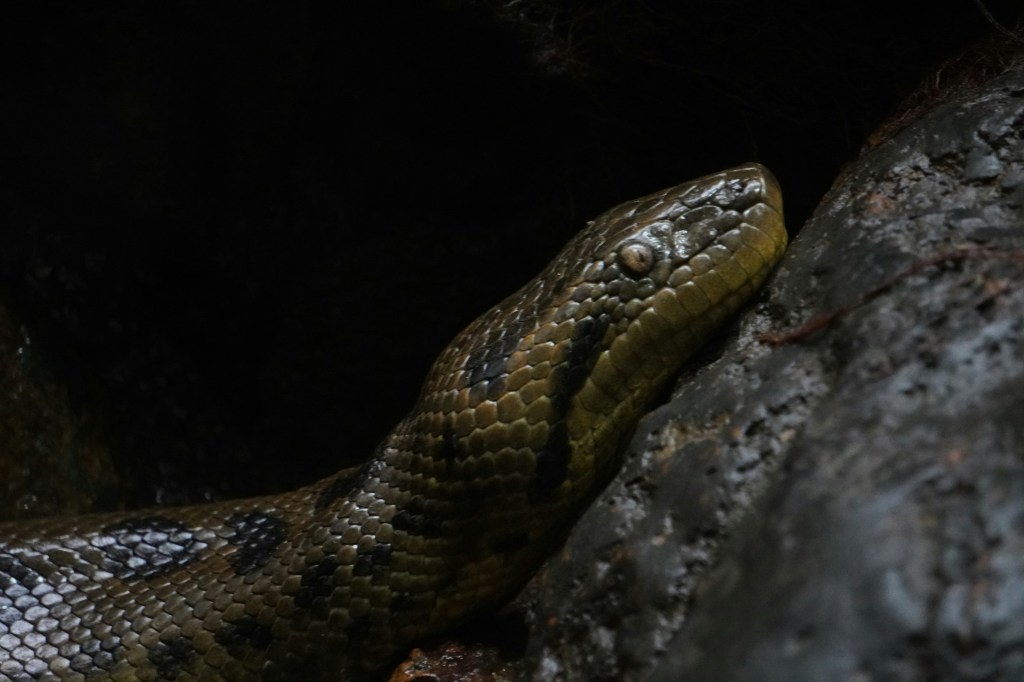
Strangely, Carlos could remember his family being afraid of strangers, and wanting to live away from everyone except their small village. That memory seemed so far-fetched that he had confirmed it with his parents many times. Apparently it was true: unlike the joy in fellowship that caused everyone to live in cities now, in the Old World many people had wanted to be isolated from others. Because sin had been so prevalent, isolating yourself from strangers could help protect your family from harm. Still, the post-Flood, pre-Kingdom jungle was a dangerous place as well. When he was a child, Carlos’s parents invested many hours simply trying to keep him safe, but even their best efforts had failed, and Carlos had been caught and killed by a jungle constrictor. Living in the Millennium, the pain and trauma of that memory had faded, though he still remembered the event, and he savored the joy and freedom of the jungle now being safe3 for a solitary adventurer.
After several more deep breaths and a silent prayer of thanks, he started running again, following a path deeper into the jungle. Eventually the path dwindled into a plant-choked track, and he slowed, carefully working his way around the undergrowth. On some trips he brought a machete to clear the trail; today he enjoyed the additional challenge of managing the jungle without a cutting tool. A few hours later, he climbed a tree, plotted his course to a stream, and swam the next portion of the journey. He pulled himself out onto the gnarly roots of a tree hung with thick-skinned orange fruit each a little longer than his hand. Of these, he gathered several, then leaned back over the stream he had just swam, dipping the end of one of the fruits just below the surface. The water erupted with piranha, each slicing off a bite with its sharp teeth before moving to let the next fish eat. In a matter of seconds, the fruit was neatly opened and Carlos enjoyed the rich orange flesh, tossing the seeds and remnants of fruit to the voracious fish. Repeating the process until his supply of fruit was used and his belly was full, he found a comfortable spot and stretched out to sleep off his large meal.
Early the next morning, he continued on, this time cautiously, looking for certain trails or a specific type of tree. Twice he followed a trail, but finding an engorged constrictor at the end each time, he turned back. Over an hour after sunrise, he finally found the trees he was seeking. Massive oblong fruit hung from their branches, covered in gray skin nearly as tough as a crocodile’s hide. Experience had taught him that several strokes of a machete could reveal the sweet pulp and disc-shaped seeds under the gray rind, but this far from civilization or the ever-helpful piranhas, few creatures would be able to access this rich food source. Attentively, Carlos studied the undergrowth around the grove, spotting another trail. The low clearance forced him to crawl, but he was rewarded at the end by the sight of a lean constrictor: one that would soon want to eat. Wiggling in beside the sluggish snake, he jostled until a good part of his skin was in contact with it, and started warming the cold-blooded animal with his body heat.
In the peace of the jungle noises, Carlos remembered asking many questions about his death. Why did his family have to endure the pain and grief of separation? Why did Carlos die while his parents and siblings lived? Who had the better life—his siblings, growing up in a very sinful world but reigning now, or himself, growing up in a world with little danger and universal knowledge of the Lord? If he hadn’t died, would his family have listened to the message of life when an outsider told them about it? Would they have been sought by Maria’s family after her death from sickness, and been able to share the message of life with them? If Carlos’s brother had died instead of Carlos, would his family still have ended up discipling the whole village? Quite often, Carlos’s father answered questions readily with straightforward answers; but when Carlos had put all those questions to him at once, his father had paused, then replied, “Eventually, I will answer these questions. However, I do not think the answers to those questions are actually the answers you want the most. Try these answers for the moment: King Jesus is good. He has great plans for your life, and they are not less because of what happened to you. And your pain and loss, my pain and loss, and all of creation groaning will be redeemed.”
Distracted in his reverie by the snake beginning to stir, Carlos again felt joy as he took stock of how much his and his family’s pain had been redeemed. His childhood was a privileged and happy dream compared to what his siblings had known—though they had gained great reward for their suffering for the Lord, so no one regretted that they had grown up in the Old World. His family’s acceptance of the message of life, and their faithfulness through other trials, had made many willing to listen to the message of life, and thousands had believed over the years and generations, many of those faithfully following the Lord and encouraging others to follow Him.
The last reptilian coil moved away from Carlos and down the trail. Calmly, Carlos watched the snake climb a tree, slither along a branch, and then drop itself onto one of the gray fruit, the force of the impact knocking the fruit from the tree. Instantly, the snake’s loops tightened, squeezing the tough fruit tighter and tighter. Despite having watched this dozens of times, Carlos still could not believe how much pressure the gray rind could withstand, locking away its pulp and seeds from both creatures and fertile soil. Then, in a mighty explosion, the serpent won. Pulp and seeds flew through the air, where hundreds of creatures would feed on the sweet treat and distribute the seeds. The snake itself would swallow what remained of the rind, eventually distributing seeds far from the original location. Even the groaning creation has been redeemed4; even the deadly snakes have become good, echoed in Carlos’s mind.
After watching the snake swallow its meal, Carlos headed for home, refreshed in both body and spirit. His family would celebrate the Sabbath with Maria’s family and the rest of the city. Food and fellowship, the King’s teaching, and joy would abound. The King had redeemed what was broken.
Afterword:
“Heaven is going to be boring; if you want to really experience life, do it now.” So goes one of the arguments to sin as much as possible in this life; and when believers’ idea of heaven is anemic, we don’t have very convincing responses.
While the Bible does not tell us specifically what happens to children who die (other than that the ones who have believed in Jesus for everlasting life will have everlasting life), someone survives to populate the earth after the Tribulation (Rev 20:8, Isaiah 65:20-23) and after the accompanying glorification or death of all the surviving adults (Rev 19:21 & 20:4). The children surviving the Tribulation are likely candidates, and children who have died throughout the ages are possibilities. Some reference Luke 18:16 (and the parallel Mt 19:14, Mk 10:14) as support for that idea.
The world and human lives (especially for glorified believers, but even for unglorified mortals) will be rich, redeemed from the daily sin we live with now. Though Satan leads a rebellion at the end of the Millennium (Rev 20:7-10), the Millennium will have much less sin than now and the eternal Kingdom none at all, and both will be wonderful places to live. Please read and study the Bible for the details we are given; may they encourage you to joyfully walk with the Lord in anticipation of that Kingdom. Anything I have wrong in this story is not because I imagined too good of things, but because the Lord has even better things in store than what I could envision.
Footnotes:
- Options concerning the eternal destiny of children who die include 1) there is an age of accountability, and all who died below that age get a chance to believe, 2) there is an age of accountability, and all who die below that age live eternally, or 3) there is no age of accountability, and anyone who dies without believing in Jesus goes to the Lake of Fire, regardless of age, including all toddlers, babies, and babies who died before birth. The latter two are not consistent with God’s justice, so I hold to the first belief, and think the age of accountability is 20 years old, based on Numbers 14:29 & 31, as well as a number of other passages that indicate 20 was the age of adulthood. Is that older than most people hypothesize for an age of accountability? Yes it is, but it is the only Biblically solid number I have found, and it is consistent with God’s great graciousness. ↩︎
- Isaiah 65:20-22 tells us that one hundred years will be considered an extremely short life in the Millennium (we know this isn’t the eternal Kingdom, because there is no more death in the eternal Kingdom), though Zechariah 8:4 does mention people eventually aging. ↩︎
- Isaiah 66:25 ↩︎
- Romans 8:22 ↩︎

Annette Halsey is a wife and homeschooling mother who is passionate about theology and the importance of serving God in the responsibilities you currently have.
Link to Millennium Mother (another story about the Millennial Kingdom)


Leave a comment